

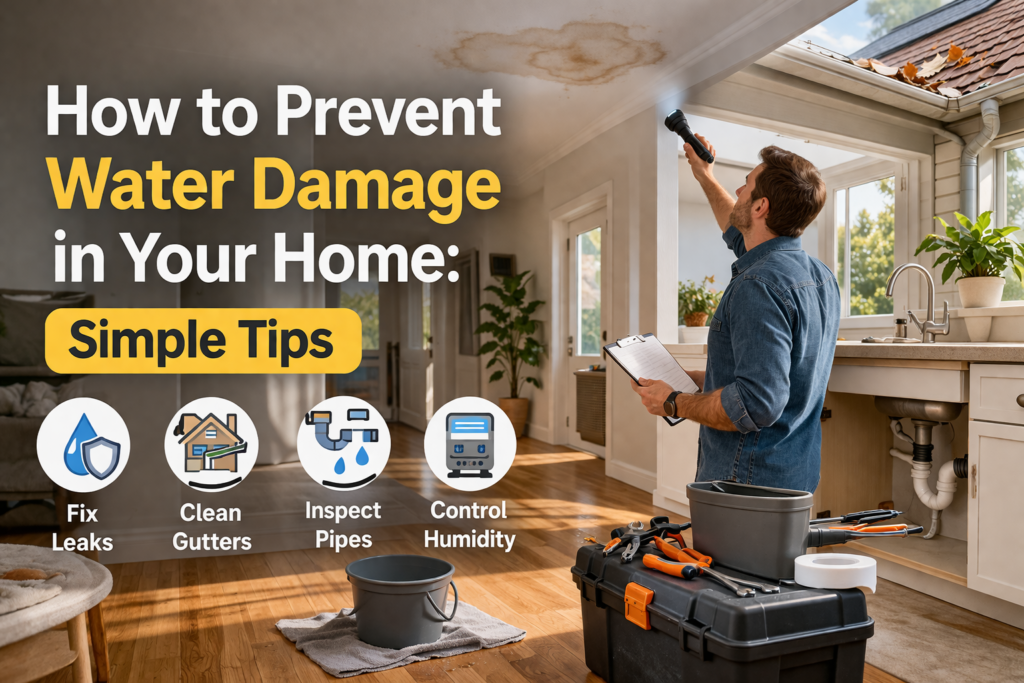
Water damage is a common concern for homeowners across the United States. It can result from a variety of causes, including heavy rain, plumbing issues, or even the buildup of moisture over time. Learning how to prevent water damage in your home is essential to safeguard your property and avoid expensive repairs. Fortunately, there are several simple yet effective steps you can take to protect your home from potential water damage.
In this article, we will discuss the most practical ways to prevent leaks, protect your foundation, and implement flood protection strategies. Whether you’re a new homeowner or a long-time resident, these tips will help you keep your home dry and damage-free.
Importance of Preventing Water Damage in Your Home
Water damage is not only costly, but it can also lead to significant structural issues. It can weaken foundations, warp wooden floors, and lead to mold growth. Understanding how to prevent water damage in your home can save you from long-term problems. By being proactive, you ensure the longevity and value of your home.
While some water damage is unavoidable, you can significantly reduce the risks with proper maintenance. Let’s dive into some essential tips for homeowners to minimize water damage and protect their property.
1. Regular Roof Maintenance to Prevent Water Damage in Your Home
Roof Leaks Prevention Tips
The roof is the first line of defense against water damage. A damaged or neglected roof can lead to leaks that infiltrate your home, causing moisture buildup and structural damage. Regularly inspect your roof for any missing shingles, cracks, or signs of wear. Addressing these issues early can prevent significant water damage from occurring.
If your roof is older or has been exposed to extreme weather, consider hiring a professional to inspect it. They can identify hidden problems such as worn-out seals or weakened areas that could lead to leaks. Keeping your roof in good condition is one of the best ways to prevent water damage in your home.
2. Plumbing Maintenance to Prevent Water Damage in Your Home
Plumbing Maintenance to Avoid Water Damage
Plumbing issues are one of the leading causes of water damage in homes. Leaky pipes, clogged drains, and faulty water heaters can all contribute to significant water damage if not addressed promptly. Regular plumbing maintenance can prevent these issues from escalating into costly repairs.
Inspect your pipes for signs of leaks or corrosion, especially in areas that are more prone to moisture, such as basements or attics. Check your water heater for any visible signs of wear, and ensure all connections are tight. If you notice lower water pressure or hear odd noises, call a professional plumber before it causes water damage.
3. Proper Drainage Systems to Prevent Water Damage in Your Home
How to Safeguard Your Home from Flooding
Good drainage is crucial for preventing water from pooling around your home’s foundation. Poor drainage can lead to water seeping into your basement or crawl spaces, causing significant water damage over time. To safeguard your home from flooding, ensure that your gutters and downspouts are functioning correctly.
Clean your gutters regularly to remove leaves and debris that can cause blockages. Ensure the downspouts direct water away from the foundation of your home. If needed, install extensions that move water several feet away from your property. This helps prevent water from pooling near the foundation.
Flood Protection for Homeowners
In areas that are prone to flooding, flood protection is essential. Installing sump pumps, flood barriers, or French drains can help direct excess water away from your home. These systems offer particular benefits during heavy rainfall or when the ground already saturates.
Consider purchasing flood insurance if you live in a high-risk area. Flood insurance can help cover the cost of repairs if your home is damaged by a flood, providing peace of mind during stormy seasons.
4. Foundation Maintenance to Prevent Water Damage in Your Home
Foundation Water Damage Prevention
The foundation is the structural base of your home, and any damage here can lead to serious problems. Water infiltration can weaken the foundation and cause cracks that lead to leaks. To prevent water damage in your home, keep the foundation in good condition by addressing cracks, gaps, and other signs of wear.
Ensure that the ground around your foundation slopes away from the house. This ensures that water doesn’t pool near the foundation and flows away from the property. If you notice cracks in the foundation, seal them immediately to prevent water from seeping in.
5. Seasonal Tips to Prevent Water Damage in Your Home
Best Waterproofing Tips for Homes
Different seasons present unique challenges for water damage. For instance, winter can bring freezing temperatures that cause pipes to burst, while summer storms can bring heavy rainfall. Adapting your water damage prevention strategies to the changing seasons is important.
Before winter, insulate your pipes to prevent them from freezing. During the rainy season, check your gutters and downspouts to ensure they are clear and functioning properly. Seasonal inspections are essential for maintaining your home’s defenses against water damage.
6. Moisture Control to Prevent Water Damage in Your Home
Fix Water Damage Before It Starts
Moisture buildup inside the home can lead to mold growth, wood rot, and other issues. Ensure that your home is properly ventilated, especially in areas like bathrooms, kitchens, and basements, where moisture is more likely to accumulate. Using exhaust fans and dehumidifiers can help reduce humidity levels and prevent water damage before it starts.
Inspect the seals around your windows and doors to ensure there are no gaps where water could enter. If you notice any areas of concern, address them immediately to prevent leaks and moisture buildup.
7. Window and Door Maintenance to Prevent Water Damage in Your Home
Prevent Leaks in Your Home
Windows and doors are common entry points for water, especially during heavy rain or snow. Ensure that all seals around your windows and doors are intact and free from gaps. Over time, the weatherstripping around doors and windows can deteriorate, allowing water to seep in.
Inspect the caulking around windows and doors and replace it if necessary. If you notice any cracks or gaps in the frames, seal them to prevent water from entering your home.
8. Regular Inspections to Prevent Water Damage in Your Home
Water Damage Repair Tips
The best way to prevent water damage is through regular inspections. It’s always better to catch potential problems early, before they become major issues. Hire a professional contractor or water damage specialist to inspect your home periodically, especially after severe weather events.
In addition to performing regular maintenance tasks yourself, consider getting professional help to ensure that your home remains water-tight. Water damage repair experts can provide advice on the most effective ways to safeguard your home and offer repair services when necessary.
Conclusion: Prevent Water Damage in Your Home with Simple Steps
Preventing water damage in your home is not an impossible task, but it does require diligence and attention to detail. By following these simple tips, including roof maintenance, plumbing checks, and seasonal preparations, you can protect your home from the devastating effects of water damage.
Remember that being proactive and catching potential issues early can save you from costly repairs down the road. Whether you’re taking steps to prevent leaks in your home or investing in flood protection for homeowners, the key is consistent maintenance. With the right approach, you can ensure that your home remains safe, dry, and secure for years to come.