
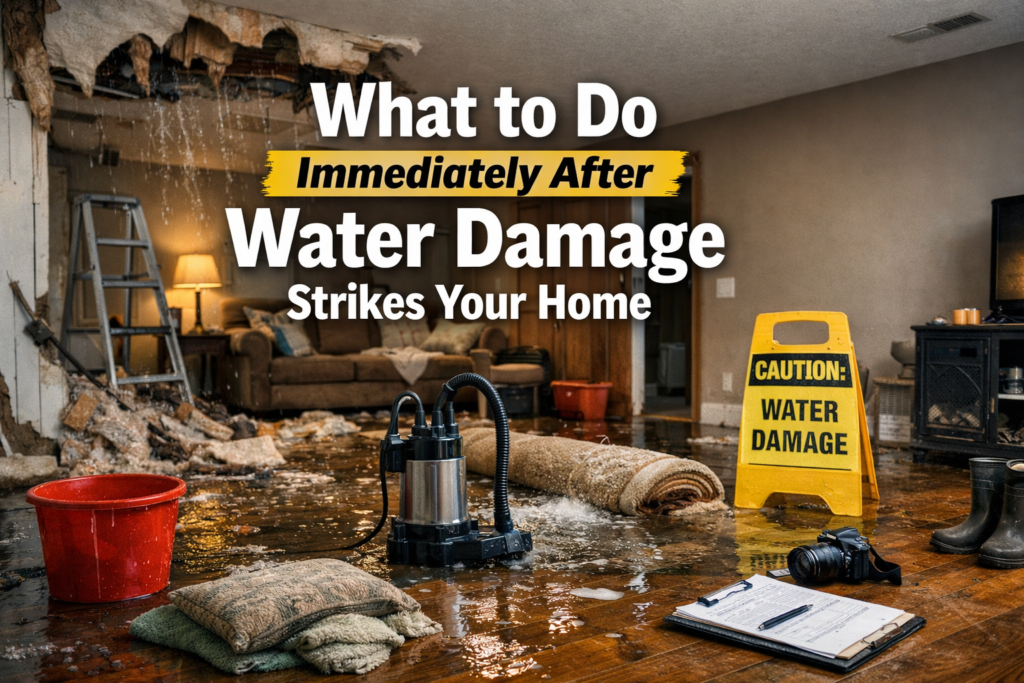
Water damage can happen without warning. A burst pipe, leaking roof, overflowing toilet, faulty appliance, or heavy rainstorm can quickly turn into a stressful and expensive disaster. Knowing what to do immediately after water damage strikes your home can help you reduce repair costs, protect your belongings, and avoid serious long-term issues like mold growth, wood rot, and structural damage.
When water damage strikes your home, the first 24 to 48 hours matter the most. Fast action can make the difference between a manageable cleanup and a major restoration project. Many homeowners panic in this situation, but having a clear step-by-step plan helps you stay calm and make smart decisions.
This guide explains exactly what to do right away after water damage strikes your home, how to limit the damage, what mistakes to avoid, and when to call professionals. It also includes helpful keyword variations naturally throughout the article so it stays readable and SEO-friendly.
Why Fast Action Matters When Water Damage Strikes Your Home
When water enters your home, it does not stay in one place for long. It spreads through floors, walls, baseboards, insulation, furniture, carpets, and even electrical systems. What looks like a small issue on the surface can quickly become a much larger problem behind the walls or under the flooring.
Here is why acting quickly matters:
- Water can weaken drywall and ceilings
- Wooden floors may swell, warp, or crack
- Damp materials can begin growing mold within 24 to 48 hours
- Electronics and appliances may become unsafe
- Repair costs can increase the longer water sits
- Insurance claims may become harder if the damage is not documented promptly
The most important thing to remember is simple: when water damage strikes your home, every hour counts. Fast response helps prevent secondary damage and makes the restoration process easier.
Step 1: Ensure Safety First Before Starting Water Damage Cleanup
Before you think about cleaning or moving anything, focus on safety. This is the first and most important step after any home water emergency.
Water damage situations often involve hidden dangers such as:
- Electrical hazards
- Slippery floors
- Weak ceilings
- Contaminated water
- Damaged walls or flooring
- Sharp debris hidden under water
Safety Checklist After Water Damage Strikes Your Home
Take these steps immediately:
- Turn off electricity if water is near outlets, cords, or appliances
- Do not walk through standing water if the power is still on
- Wear rubber gloves, boots, and protective clothing
- Keep children and pets away from the damaged area
- Avoid touching wet electrical equipment
- Leave the home if ceilings are sagging or floors feel unstable
If the water is deep, dirty, or caused by sewage backup, do not try to handle it alone. In serious cases, emergency professionals should inspect the area before you re-enter.
Types of Water Damage in Your Home You Should Know
Understanding the water type helps you decide how dangerous the situation is.
Clean water:
This usually comes from a broken pipe, sink overflow, or appliance leak. It is the least harmful at first, but it can become unsafe if left too long.
Gray water:
This may come from washing machines, dishwashers, or shower drains. It may contain contaminants and should be handled carefully.
Black water:
This includes sewage backups, floodwater, or heavily contaminated water. This type is dangerous and requires professional cleanup.
Safety should always come first when water damage strikes your home.
Step 2: Stop the Source of Water Damage in Your Home Immediately
Once the area is safe, the next step is to stop the water source. If water keeps entering the space, the damage will continue to spread.
Common Sources of Water Damage in Your Home
Some of the most common causes include:
- Burst or leaking pipes
- Broken water heaters
- Overflowing sinks, bathtubs, or toilets
- Leaking dishwashers or washing machines
- Refrigerator line leaks
- Roof leaks
- Foundation seepage
- Stormwater intrusion
- Clogged gutters causing water to enter walls
How to Stop Water Damage Fast
Depending on the source, take one or more of these actions:
- Shut off the main water valve
- Turn off the appliance causing the leak
- Close the valve connected to a toilet or sink
- Place buckets under active leaks
- Use towels or rags to block spreading water
- Tarp roof leaks temporarily if it is safe to do so
Stopping the source is one of the most important parts of emergency water damage response. If you cannot find the source or stop it safely, call a plumber or emergency restoration company right away.
Step 3: Contact Your Insurance Company After Water Damage Strikes Your Home
Many homeowners wait too long before contacting their insurance provider. That can slow down the claims process and cause unnecessary problems later.
If water damage strikes your home, call your homeowners insurance company as soon as you can. Even if you are not sure whether the damage is covered, report it early.
What Insurance May Cover for Water Damage in Your Home
Depending on your policy, insurance may cover damage caused by:
- Burst pipes
- Sudden appliance failures
- Storm damage
- Accidental overflows
- Roof leaks caused by covered events
It usually does not cover damage caused by long-term neglect, maintenance issues, or unresolved leaks that developed over time.
Information to Share After Water Damage Strikes Your Home
Be ready to provide:
- The date and time the damage happened
- The suspected cause
- Which rooms or areas were affected
- Photos and videos of the damage
- A list of damaged items
- Steps you already took to prevent more damage
Prompt reporting helps support your claim and shows that you acted responsibly after the water damage emergency.
Step 4: Document Everything After Water Damage Strikes Your Home
Before removing too many items or starting major repairs, document the damage carefully. This step can make a big difference when filing an insurance claim or getting repair estimates.
What to Photograph After Water Damage Strikes Your Home
Take clear photos and videos of:
- Standing water
- Wet floors and carpets
- Damaged drywall
- Ceiling stains or sagging areas
- Furniture and rugs
- Electronics and appliances
- Baseboards and cabinets
- Personal belongings such as books, clothing, and photos
Try to capture wide shots of entire rooms as well as close-up images of damaged items.
Create a Written Water Damage List
Along with photos, make a simple list of:
- Damaged items
- Approximate purchase date
- Estimated value
- Brand or model numbers when possible
- Whether the item looks salvageable or not
Good documentation supports smoother insurance claims and more accurate water damage repair estimates.
Step 5: Remove Standing Water Quickly After Water Damage Strikes Your Home
After safety and documentation are handled, begin removing standing water. The longer water remains, the more it soaks into flooring, walls, and furniture.
Tools You Can Use for Water Damage Removal
Depending on how much water is present, you can use:
- Buckets
- Mops
- Towels
- Wet/dry vacuum
- Sump pump
- Floor squeegee
Even a small amount of water can cause serious problems if ignored. Fast water extraction is one of the best ways to reduce repair costs.
Why Quick Water Removal Matters After Water Damage Strikes Your Home
Standing water can:
- Soak into subfloors
- Ruin carpet padding
- Damage wood furniture
- Stain drywall
- Create musty odors
- Increase mold risk
If large areas are flooded or water depth is more than a couple of inches, professional extraction equipment may be needed.
Step 6: Begin Drying the Area After Water Damage Strikes Your Home
After the visible water is removed, the real drying process begins. This step is often underestimated. Many homeowners think the job is done once the water is gone, but hidden moisture can remain behind walls, under floors, and inside cabinets.
When water damage strikes your home, proper drying is what helps prevent mold, odors, and future structural damage.
Best Ways to Dry a Water-Damaged Area
Use as many airflow and moisture-control methods as possible:
- Open windows and doors if weather allows
- Run fans continuously
- Use dehumidifiers
- Turn on air conditioning
- Remove drawers and cabinet doors to improve airflow
- Lift cushions and separate wet items
- Pull rugs away from wet floors
Areas That Need Extra Attention After Water Damage Strikes Your Home
Focus on drying:
- Carpets
- Hardwood floors
- Baseboards
- Drywall
- Cabinets
- Insulation
- Upholstered furniture
- Closets and corners
Drying is one of the most important parts of home water damage restoration. Incomplete drying is one of the main reasons mold appears later.
Step 7: Remove Wet Items After Water Damage Strikes Your Home
Wet items left in place trap moisture and slow the drying process. Removing them quickly can help save some belongings and reduce damage to the room itself.
Items You Should Move Out After Water Damage Strikes Your Home
Remove items such as:
- Rugs
- Carpets if possible
- Furniture
- Curtains
- Bedding
- Pillows
- Clothing
- Books
- Cardboard boxes
- Decorative items
Move them to a dry, well-ventilated area. Set items apart so air can circulate around them.
Should You Throw Away Items After Water Damage in Your Home
Not always. Some items can be dried and cleaned if handled quickly. Others, especially porous materials that stay wet too long, may need to be discarded.
Items that are often harder to save include:
- Wet carpet padding
- Particleboard furniture
- Soaked insulation
- Ceiling tiles
- Waterlogged cardboard boxes
Removing wet belongings helps speed up the restoration process and limits moisture buildup indoors.
Step 8: Protect Valuable Belongings After Water Damage Strikes Your Home
Some items have more value than money alone. Family photos, legal records, electronics, and keepsakes should be handled early if they can be saved safely.
What to Save First After Water Damage Strikes Your Home
Focus on these items first:
- Important documents
- Passports and IDs
- Insurance papers
- Birth certificates
- Photos and albums
- Laptops and electronics
- Jewelry
- Family heirlooms
- Cash and small valuables
Tips for Saving Important Items After Water Damage in Your Home
Use these quick tips:
- Freeze wet documents if you cannot dry them right away
- Lay photos flat to air dry
- Separate papers carefully to avoid tearing
- Unplug electronics and let them dry completely before inspection
- Do not turn on wet devices
Quick action can reduce permanent loss and help save items that matter most.
Step 9: Check for Hidden Moisture After Water Damage Strikes Your Home
One of the biggest mistakes homeowners make is only dealing with what they can see. Water often travels behind surfaces and into hidden spaces.
Where Hidden Moisture Hides After Water Damage Strikes Your Home
Check areas such as:
- Behind baseboards
- Under laminate or wood flooring
- Inside drywall
- Behind cabinets
- Beneath carpets
- Around insulation
- Inside closets
- Around window frames
Signs Mold May Start After Water Damage in Your Home
Watch for:
- Musty smells
- Green, black, or dark spots
- Peeling paint
- Bubbling walls
- Soft drywall
- Persistent dampness
Mold can start growing within 24 to 48 hours, especially in warm, humid conditions. That is why drying and moisture control must happen quickly after water damage strikes your home.
Step 10: Remove Damaged Materials After Water Damage Strikes Your Home
Not every material can be restored. Some items absorb too much water and become a long-term problem if left in place.
Materials Often Removed During Water Damage Repair
These may need to be removed if heavily soaked:
- Drywall
- Insulation
- Carpet padding
- Ceiling tiles
- Particleboard
- Pressed wood trim
- Damaged laminate flooring
Why Removing Damaged Materials Matters After Water Damage Strikes Your Home
Leaving badly soaked materials in place can:
- Hold moisture for days or weeks
- Spread bad odors
- Encourage mold growth
- Weaken structural integrity
- Make future repairs more expensive
Water damage restoration is not just about drying surfaces. It also means removing materials that can no longer be safely saved.
Step 11: Clean and Disinfect Surfaces After Water Damage Strikes Your Home
Once water is removed and damaged materials are addressed, cleaning is the next essential step. Water damage can leave behind dirt, bacteria, and contamination, especially if the source was not clean water.
Cleaning Supplies for Water Damage Cleanup
Use appropriate supplies such as:
- Mild detergent
- Warm water
- Disinfectant spray
- Antibacterial wipes
- A bleach solution if safe and appropriate
- Protective gloves and masks
Surfaces to Clean After Water Damage Strikes Your Home
Clean and disinfect:
- Floors
- Baseboards
- Furniture
- Walls
- Cabinets
- Non-porous household items
Do not mix cleaning chemicals unless the label clearly says it is safe. Good sanitation helps reduce odors and supports a healthier indoor environment.
Step 12: Inspect Your Home for Structural Damage After Water Damage Strikes Your Home
After the initial cleanup, inspect the home carefully for structural concerns. Some damage is obvious, while other issues may show up over time.
Signs of Structural Damage After Water Damage in Your Home
Look for:
- Warped flooring
- Soft or swollen wood
- Cracked drywall
- Loose tiles
- Sagging ceilings
- Buckling walls
- Separated trim
- Doors that no longer close properly
Why Structural Inspections Matter After Water Damage Strikes Your Home
If water weakens part of the structure, a cosmetic repair will not solve the real problem. Ignoring structural issues can lead to:
- Further damage
- Safety risks
- Higher repair costs later
- Problems during future home inspections or resale
If anything looks unstable or unsafe, call a licensed contractor or water damage professional.
Step 13: Know When to Call Water Damage Restoration Professionals
Some water damage situations are small enough to handle on your own. Others need professional help immediately.
When Professional Help Is Needed After Water Damage Strikes Your Home
Call professionals if:
- Water depth is more than 2 inches
- A large area is affected
- Sewage or floodwater is involved
- Mold is already visible
- Ceilings are sagging
- Structural damage is present
- The water reached electrical systems
- You cannot fully dry the area
Professional Equipment Used for Water Damage Restoration
Water damage restoration companies often use:
- Industrial dehumidifiers
- High-powered air movers
- Moisture meters
- Infrared tools
- Specialized drying systems
- Commercial sanitizing products
Professional drying and restoration can prevent long-term damage that might otherwise be missed.
Step 14: Common Mistakes to Avoid After Water Damage Strikes Your Home
Knowing what not to do is just as important as knowing what to do. Some mistakes can make the damage worse or create new safety hazards.
Waiting Too Long to Act
Delays allow water to spread deeper into materials. This increases drying time, repair cost, and mold risk.
Skipping Documentation
Without photos and records, your insurance claim may become harder to prove.
Using Electrical Devices Near Water
This creates a serious safety risk and should never be done unless the area is confirmed safe.
Leaving Hidden Moisture Behind
Dry surfaces do not always mean the area is fully dry. Moisture inside walls and under flooring can lead to mold.
Not Removing Unsalvageable Materials
Keeping soaked materials in place may seem cheaper at first, but it often causes bigger issues later.
Trying to Handle Contaminated Water Alone
Gray water and black water can contain harmful bacteria and should be treated with extreme caution.
Avoiding these mistakes improves your chances of a faster and more successful recovery when water damage strikes your home.
Water Damage Timeline in Your Home: How Fast Damage Gets Worse
Understanding how quickly water damage spreads can help homeowners realize why immediate action matters so much.
The First Hour After Water Damage Strikes Your Home
- Water begins spreading through the room
- Floors start absorbing moisture
- Furniture legs and rugs become wet
- Paint and finishes may begin to stain
Within 24 Hours of Water Damage in Your Home
- Drywall starts to soften
- Wood begins to swell
- Odors may start forming
- Upholstered furniture absorbs moisture
- Metal surfaces may begin to tarnish
Within 48 Hours of Water Damage in Your Home
- Mold growth can begin
- Wood can warp further
- Carpet padding may become unsalvageable
- Indoor air quality may decline
Several Days After Water Damage Strikes Your Home
- Structural materials may weaken
- Strong odors can develop
- Mold damage may spread behind walls
- Restoration costs can rise sharply
This timeline shows why fast response is essential after any home water emergency.
How to Prevent Future Water Damage in Your Home
After cleanup and repairs, prevention should become part of your regular home maintenance routine. Preventing future water problems can save money, stress, and damage.
Practical Tips to Prevent Water Damage in Your Home
Take these steps regularly:
- Inspect plumbing for leaks
- Replace worn hoses on appliances
- Check under sinks monthly
- Clean gutters and downspouts
- Inspect roof shingles after storms
- Seal windows and doors
- Maintain your water heater
- Install leak detectors
- Make sure your sump pump works properly
- Keep drains clear
Seasonal Tips to Prevent Water Damage in Your Home
Different times of year create different risks:
During winter:
Protect pipes from freezing and bursting.
During spring and rainy seasons:
Check roof drainage, gutters, and foundation drainage.
During summer:
Inspect air conditioning lines and attic moisture.
Before storms:
Review weak points around windows, roofing, and exterior walls.
Good maintenance reduces the chances that another water emergency will disrupt your home.
What Homeowners Should Do in the First 24 Hours After Water Damage Strikes Your Home
The first day is the most important stage of the response process. If you focus on the right steps, you can often reduce the severity of the damage significantly.
First 24-Hour Checklist After Water Damage Strikes Your Home
In the first 24 hours:
- Make sure the area is safe
- Shut off water and electricity if needed
- Stop the leak or source of water
- Call your insurance company
- Take photos and videos
- Remove standing water
- Start drying the area
- Move wet belongings
- Remove unsalvageable materials
- Clean and disinfect affected surfaces
- Watch for mold and hidden moisture
- Call professionals if the damage is severe
This simple order can help homeowners stay focused and avoid common errors during a stressful situation.
Should You DIY or Hire a Professional for Water Damage Repair
This depends on the size of the damage, the water source, and how much moisture has spread.
Small Water Damage Problems You May Handle Yourself
You may be able to manage it on your own if:
- The leak was small
- The water was clean
- Only one small area is wet
- There is no structural damage
- You can dry the space completely
- No mold is present
When Experts Should Handle Water Damage in Your Home
Hire professionals if:
- Multiple rooms are affected
- Water came from sewage or flooding
- Flooring and drywall are heavily soaked
- Drying equipment is needed
- You smell mold or see discoloration
- You are unsure how far the water spread
Knowing your limits can help prevent a minor water issue from becoming a major restoration mistake.
Emotional Stress After Water Damage Strikes Your Home Is Real
Water damage does not only affect walls, floors, and furniture. It also affects peace of mind. Homeowners often feel overwhelmed, anxious, or unsure where to start.
The best way to reduce stress is to take things step by step. Focus first on safety, then on stopping the source, then on cleanup and drying. A simple plan makes the situation feel more manageable.
Even if the damage looks severe, quick action can still protect much of your home. Staying calm and acting fast gives you the best chance of a successful recovery.
Final Thoughts on What to Do Immediately After Water Damage Strikes Your Home
Knowing what to do immediately after water damage strikes your home can protect your property, lower repair costs, and help prevent mold and structural issues. Water damage moves fast, but homeowners who respond quickly can often reduce the worst effects.
The most important steps are:
- Stay safe
- Stop the source of water
- Contact your insurance company
- Document everything
- Remove standing water quickly
- Dry the area thoroughly
- Clean and disinfect surfaces
- Remove damaged materials
- Watch for mold
- Call professionals when needed
When water damage strikes your home, every minute matters. Fast action, smart decisions, and proper drying can help restore your space and protect your investment for the long term.