

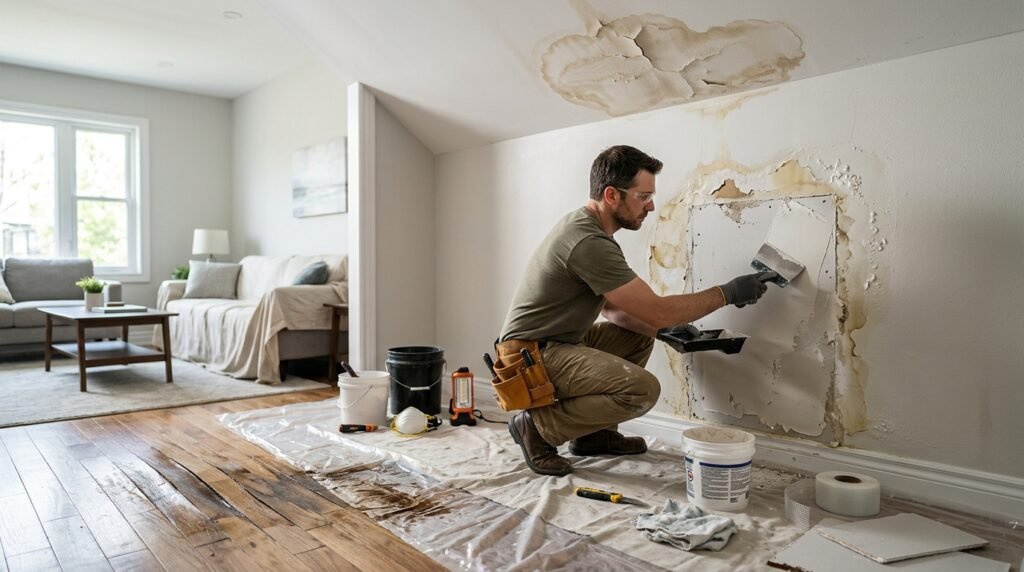
Water damage can happen in any home, often when you least expect it. A leaking pipe, roof damage, or even a broken appliance can allow water to spread into your walls, ceilings, and floors, making prompt repair essential.
At first, the damage may look small. But if you do not fix it quickly, it can cause bigger problems. These include weaker materials and unhealthy indoor air.
Learning how to fix water-damaged walls, ceilings, and floors is important for every homeowner. Quick action can reduce repair costs and prevent long-term damage. In many cases, you can handle minor repairs yourself. However, more serious damage may require professional help.
In this guide, you will learn step-by-step methods for repairing water damage in a house. You will also get tips to prevent mold and mildew after water damage. These tips will help protect your home in the future.
Common Causes of Water Damage in Homes
Understanding the cause of water damage helps you fix the problem and prevent it from happening again.
Plumbing Leaks
Leaking or burst pipes are one of the most common causes of indoor water damage. Water can slowly soak into walls and floors, leading to hidden problems.
Roof Leaks
Damaged shingles or clogged gutters allow rainwater to enter the home. This often affects ceilings and upper walls.
Appliance Failures
Washing machines, dishwashers, and water heaters may leak or overflow, causing water to spread across floors.
Flooding and Storm Damage
Heavy rain or flooding can cause serious water entry, especially in basements. This can lead to major structural damage if not handled quickly.
Signs of Water Damage to Look For
Water damage is not always obvious right away. Recognizing early signs can help you act before the problem becomes worse and delays water damage repair.
Visible Stains and Marks
Dark spots or yellow stains on walls and ceilings often indicate moisture buildup.
Peeling Paint or Bubbling Walls
When water gets behind paint or wallpaper, it causes surfaces to bubble or peel.
Warped or Soft Flooring
Water can cause floors to swell, bend, or feel soft under your feet.
Musty Smell
A damp, musty odor often means mold and mildew are developing.
Steps to Take Before Starting Water Damage Repair
Before starting repairs, it is important to prepare the area properly.
Stop the Water Source
Fix the leak or shut off the water supply to prevent further damage.
Remove Standing Water
Use towels, mops, or a wet vacuum to remove any visible water.
Dry the Area Completely
Good airflow helps remove moisture. Use fans and open windows to dry affected areas.
Inspect the Damage
Check how deep the water has spread. This will help you decide if simple repairs are enough or if you need professional restoration.
Water Damage Repair for Walls
Walls are one of the most affected areas in water damage situations.
Check the Condition of Drywall
Drywall absorbs water quickly. If it becomes soft or swollen, it usually needs replacement.
Remove Damaged Sections
Cut out the damaged drywall and remove any wet insulation behind it.
Let the Area Dry
Make sure the wall interior is fully dry to prevent mold and mildew after water damage.
Install New Drywall
Attach a new drywall piece using screws and secure it properly.
Finish and Paint After Water Damage Repair
Apply joint compound, sand the surface, and repaint the wall. This completes the water damage repair for the wall.
Water Damage Repair for Ceilings
Ceilings often show damage from leaks above.
Fix the Source of the Leak
Before repairing, make sure the leak from the roof or plumbing is fixed.
Remove Weak Sections
Cut out sagging or damaged ceiling areas carefully.
Clean Mold If Present
If you see mold, clean it before continuing repairs. For a deeper walkthrough, see our complete mold-after-water-damage cleanup guide.
Patch the Ceiling
Install new drywall and secure it properly.
Repaint the Surface to Complete Water Damage Repair
Once smooth, repaint the ceiling to match the rest of the room. This completes water damage repair for the ceiling.
Water Damage Repair for Floors
Different types of flooring require different repair methods.
Carpet Flooring
Dry the carpet quickly. In many cases, you must replace the padding underneath.
Hardwood Floors
Wood floors may warp after water exposure. Minor damage may improve after drying, but severe damage requires replacement.
Laminate Floors
Laminate flooring usually cannot be repaired once it absorbs water. Replace damaged boards.
Tile Floors
Tiles resist water, but moisture can damage the layer underneath. Proper repair depends on the flooring type and damage level.
Preventing Mold After Water Damage Repair
Mold can grow quickly after water exposure. Preventing it is an important part of repairing water damage in a house.
Dry Surfaces Quickly
The faster you dry materials, the lower the risk of mold growth.
Remove Wet Materials
Discard items like insulation or carpet padding that cannot be dried.
Improve Ventilation
Good airflow reduces moisture and helps prevent mold buildup.
Consider Mold Remediation as Part of Water Damage Repair
For larger problems, mold remediation may be required to fully remove contamination.
When to Call a Professional for Water Damage Repair
Some water damage situations require expert help.
Large Affected Areas
If multiple rooms are damaged, professional services are recommended.
Electrical Risks
Water near wiring or outlets can be dangerous.
Structural Damage
Serious structural damage from water should always be handled by professionals.
Severe Mold Growth
Large mold problems require proper equipment and safe removal.
Tips to Prevent Future Water Damage
Preventing water damage saves time and money.
Regular Inspections
Check pipes, roofs, and appliances for leaks.
Clean Gutters
Proper drainage helps prevent roof and wall leaks.
Install Leak Detectors
These devices alert you when water leaks occur.
Maintain Proper Ventilation
Good airflow reduces moisture buildup inside your home. For long-term protection, see our full guide on how to prevent water damage in your home.
Frequently Asked Questions About Water Damage Repair
Can I do water damage repair myself?
Yes, you can repair minor damage with basic tools. Severe damage may require professionals.
How long does water damage repair drying take?
It usually takes a few days, depending on the moisture level and ventilation.
Can water damage cause health problems without repair?
Yes, mold and mildew can affect indoor air quality and cause health issues.
Is water damage repair expensive?
Costs vary depending on the severity, but early repairs help reduce expenses.
Final Thoughts on Water Damage Repair at Home
Water damage can affect walls, ceilings, and floors in serious ways. Acting quickly is the key to preventing further damage and reducing repair costs.
By learning how to fix water-damaged walls, ceilings, and floors, homeowners can handle small problems. They will also know when to call professionals. Proper drying, timely repairs, and mold prevention are essential steps in successful restoration.
With regular maintenance and quick action, you can protect your home and avoid costly repairs in the future.