
Water damage can turn into a costly home repair problem faster than most homeowners expect. One of the biggest risks is mold, which can begin growing within 24 to 48 hours after a leak, flood, or burst pipe. Learning how to deal with mold after water damage is important for protecting your home, your indoor air quality, and your long-term repair budget. The sooner you act, the better your chances of stopping mold before it spreads behind walls, under flooring, or into hidden areas.
This complete guide explains how to deal with mold after water damage, how to spot it early, how to clean it safely, and how to prevent it from coming back.
Why Mold Grows After Water Damage
Mold grows when three conditions come together:
- Moisture
- Warm temperatures
- Organic materials like drywall, wood, carpet, and insulation
After a leak, flood, or burst pipe, your home can quickly become the perfect environment for mold. Even a small amount of trapped moisture can create a serious mold risk if it is not handled quickly.
How Fast Does Mold Grow?
In many cases:
- Mold can begin forming within 24 to 48 hours
- Colonies may spread within 3 to 5 days
- Larger infestations can develop within 1 to 2 weeks
That is why quick action matters so much after any type of water damage.
Signs to Watch Before You Deal With Mold After Water Damage
Before starting cleanup, you need to confirm whether mold is actually present. Sometimes it is obvious, but in many homes, mold hides behind walls, under flooring, or inside cabinets.
Common Warning Signs
Watch for these signs of mold after water damage:
- Musty or earthy odors
- Dark spots on walls or ceilings
- Peeling paint or bubbling drywall
- Warped wood or flooring
- Increased allergy symptoms indoors
- Visible fuzzy, slimy, or discolored patches
Hidden Mold Clues
Even when mold is not visible, these signs may point to a deeper problem:
- A damp smell that does not go away
- Past leaks in the same area
- Water stains that continue to spread
- Frequent condensation problems
- Soft drywall or baseboards
If water sat in an area for more than 24 to 48 hours, the mold risk is already high.
Step 1: Stop the Water Source Immediately
Before you do any mold cleanup after flooding or leaks, you need to stop the source of moisture. If the water problem continues, mold will return no matter how well you clean the area.
Common Water Sources to Check
Inspect these common causes:
- Burst pipes
- Roof leaks
- Appliance leaks
- HVAC condensation
- Basement seepage
- Overflowing tubs or toilets
Take photos of the damage before you begin cleanup, especially if you may need to file an insurance claim later.
Step 2: Dry the Area Completely
One of the most important parts of water damage mold prevention is thorough drying. Mold cannot continue growing without moisture, so removing hidden dampness is just as important as cleaning visible surfaces.
How to Dry Your Home Fast
Use several drying methods at the same time for the best results:
- Run fans continuously
- Use a dehumidifier
- Open windows if outdoor conditions are dry
- Remove wet rugs, fabrics, and other materials
- Increase airflow throughout the room
- Turn on air conditioning if available
Moisture Targets
Try to keep indoor humidity below 50%. In most cases, the affected area should be dried within 24 to 72 hours. If materials still feel damp after that, moisture may be trapped behind walls, under flooring, or inside insulation.
How to Deal with Mold After Water Damage on Walls and Surfaces
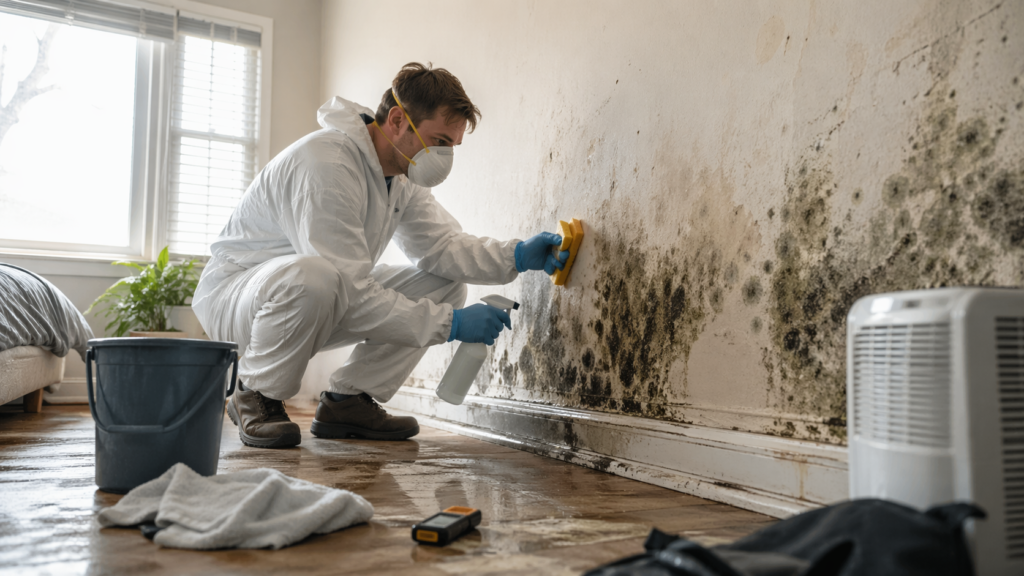
This is the most important part of the cleanup process. If the mold-covered area is small, many homeowners can handle it safely. In general, mold growth under 10 square feet is more manageable for DIY cleanup. Larger areas often need professional remediation.
Safety Gear You Should Wear
Before starting, wear:
- An N95 mask or respirator
- Rubber gloves
- Safety goggles
- Long sleeves and pants
This helps reduce your exposure to airborne mold spores.
Cleaning Solution Options
You can use one of these options:
- White vinegar
- Hydrogen peroxide
- A commercial mold remover
- Mild detergent and water
Do not mix cleaning chemicals together.
Step-by-Step Mold Removal Process
Follow these steps carefully:
1. Contain the Area
Close doors and isolate the space as much as possible so spores do not spread.
2. Lightly Dampen the Mold
A light mist can help reduce airborne spores before scrubbing.
3. Scrub the Surface
Use a cloth, sponge, or soft brush with your cleaning solution to remove mold from the surface.
4. Wipe and Rinse
Remove any remaining residue with clean water.
5. Dry the Area Fully
This step is critical. Any moisture left behind can allow mold to return.
Step 5: Deal With Black Mold After Water Damage
Many homeowners worry about black mold after water damage. Not every dark-colored mold is toxic, but any mold growth should be taken seriously.
When Black Mold May Be More Dangerous
Risk tends to increase when:
- The affected area is large
- Mold keeps returning after cleanup
- Someone in the home has asthma or allergies
- The home has a long-term moisture problem
When to Call Professionals
Consider professional help if:
- Mold covers more than 10 square feet
- Mold is inside HVAC systems
- Mold is behind walls or under flooring
- The home has a strong musty smell in multiple rooms
- The water damage came from major flooding
Professional remediation teams use containment systems, protective gear, and specialized drying equipment that most homeowners do not have.
How to Deal with Mold After Water Damage and Remove Odors
After visible mold is removed, you still need to deal with odors and any lingering airborne particles. This step helps finish the job and makes the room safer and more comfortable again.
Effective Deodorizing Methods
Try these methods:
- Run an air purifier with a HEPA filter
- Place baking soda in the room to absorb odors
- Keep a dehumidifier running for several days
- Improve ventilation
- Replace HVAC filters if needed
This added step helps make mold cleanup after flooding more effective.
How to Prevent Mold After a Water Leak
Prevention is the best long-term strategy. Once you know how to deal with mold after water damage, it becomes easier to stop the same problem from happening again.
Tips to Help Prevent Mold After Water Damage
Use these habits to reduce the risk:
- Fix leaks as soon as you notice them
- Keep indoor humidity below 50%
- Use bathroom exhaust fans
- Clean gutters regularly
- Insulate cold pipes
- Check under sinks each month
- Maintain roof flashing and shingles
- Improve yard drainage around the home
High-Risk Areas to Monitor
Pay extra attention to:
- Basements
- Bathrooms
- Kitchens
- Laundry rooms
- Attics
- Around windows and exterior walls
Early detection can significantly reduce cleanup and repair costs.
Common Mistakes to Avoid
Many homeowners make the same errors when dealing with mold after water damage. These mistakes can allow mold to return or make the problem worse.
Avoid these common issues:
- Painting over mold
- Ignoring small leaks
- Not drying deeply enough
- Using bleach on porous materials
- Skipping protective gear
- Waiting too long to act
Even a small mistake can turn a manageable cleanup into a much bigger repair problem.
When Mold Damage Becomes Serious
Sometimes DIY cleanup is not enough. If mold has spread beyond the surface or keeps returning, the problem may be deeper than it looks.
Warning Signs of Severe Mold Damage
Watch for these red flags:
- Mold returns after cleaning
- Walls feel soft, damp, or crumbly
- A strong musty odor spreads through multiple rooms
- You notice discoloration on walls, ceilings, or flooring
- Allergy or breathing symptoms get worse indoors
In these situations, professional mold remediation is usually the safest option. Experts can inspect hidden moisture, contain airborne spores, and remove contamination more thoroughly than a basic surface cleanup.
Cost of Mold Removal After Water Damage
The cost of mold removal after water damage depends on how early the problem is found, how far it has spread, and whether damaged materials need to be replaced.
Typical Price Ranges
- Small DIY cleanup: $0 to $100
- Minor professional cleanup: $500 to $1,500
- Moderate infestation: $1,500 to $5,000
- Severe whole-home remediation: $5,000 to $20,000+
In general, early action often lowers both cleanup costs and repair expenses.
Frequently Asked Questions About How to Deal with Mold After Water Damage
Before you move on, here are a few common questions homeowners ask about mold cleanup after water damage.
How quickly should I act after water damage?
Immediately. Mold can begin growing within 24 to 48 hours, so drying and cleanup should start as soon as possible.
Can mold grow even after the area looks dry?
Yes. Hidden moisture inside walls, subfloors, or insulation can still support mold growth. That is why deep drying is so important.
Is bleach the best way to remove mold?
Bleach can work on some non-porous surfaces, but it is usually less effective on drywall, wood, and other porous materials. Vinegar, hydrogen peroxide, or a commercial mold remover often work better.
Will mold go away on its own?
No. Mold will continue to grow as long as moisture is present. The moisture source must be fixed, and the affected area must be cleaned and dried properly.
How do I know if mold is behind my walls?
Common warning signs include musty smells, recurring stains, bubbling paint, peeling drywall, or past leaks in that area. A moisture meter or professional inspection can help confirm hidden mold.
Final Thoughts on How to Deal with Mold After Water Damage
Knowing how to deal with mold after water damage can help you reduce repair costs, protect your home, and lower health risks for your family. The most important steps are to stop the water source, dry the area completely, remove materials that cannot be saved, and clean affected surfaces carefully. Small problems may be manageable for homeowners, but larger infestations are usually safer to leave to professionals.
Do not wait for the problem to get worse. If your home has recently had a leak, flood, or burst pipe, inspect the area today and deal with any lingering moisture right away. Acting early is one of the best ways to handle mold after water damage before it spreads.