

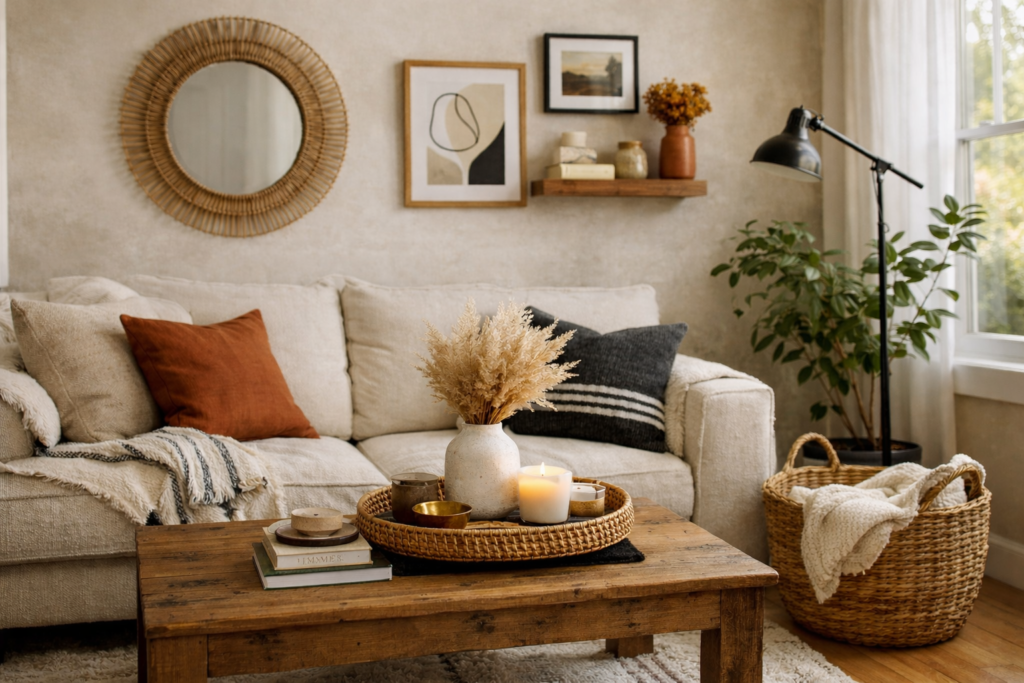
In a culture that often equates beauty with buying power, the most refined homes are quietly shifting direction. Today’s most compelling interiors are not built on constant consumption. They are curated with intention. If you have been searching for home decor ideas without buying new furniture or wondering how to decorate a home without spending money, you are already moving toward a smarter and more elegant design approach.
Across the U.S., homeowners are embracing sustainability not as a limitation, but as a creative advantage. The rise of Cremèle Neutrals, a palette of soft creams, warm whites, and muted taupes, alongside Tactile Minimalism, reflects a deeper desire for calm and grounded spaces. Meanwhile, the idea of Digital Furniture Shuffling, or reimagining layouts before moving anything, has become a practical way to refresh a room without spending money.
This guide goes beyond surface-level tips. It draws from Environmental Psychology, which explores how design affects emotions, and Biophilic Design, which highlights our natural connection to light, texture, and nature. Together, these principles show that your home already contains what it needs to feel beautiful. It simply needs to be edited, repositioned, and reinterpreted.
If you have ever wondered how to decorate your room without buying anything or looked for ways to refresh your space on a budget, these ideas will help you transform your home with what you already own.
Rearranging Furniture with Purpose
Rearranging a room is not just a physical task. It is a psychological reset. The way furniture is positioned influences how your brain experiences comfort, safety, and ease. In Environmental Psychology, this is known as spatial flow, or the ease with which people move through and visually understand a room.
Better Spatial Flow for a Calmer Room
Most homes do not suffer from a lack of furniture. They suffer from overcrowding. When pieces are pushed tightly against walls or grouped awkwardly, movement feels restricted and the room can create low-level visual stress.
The solution is negative space.
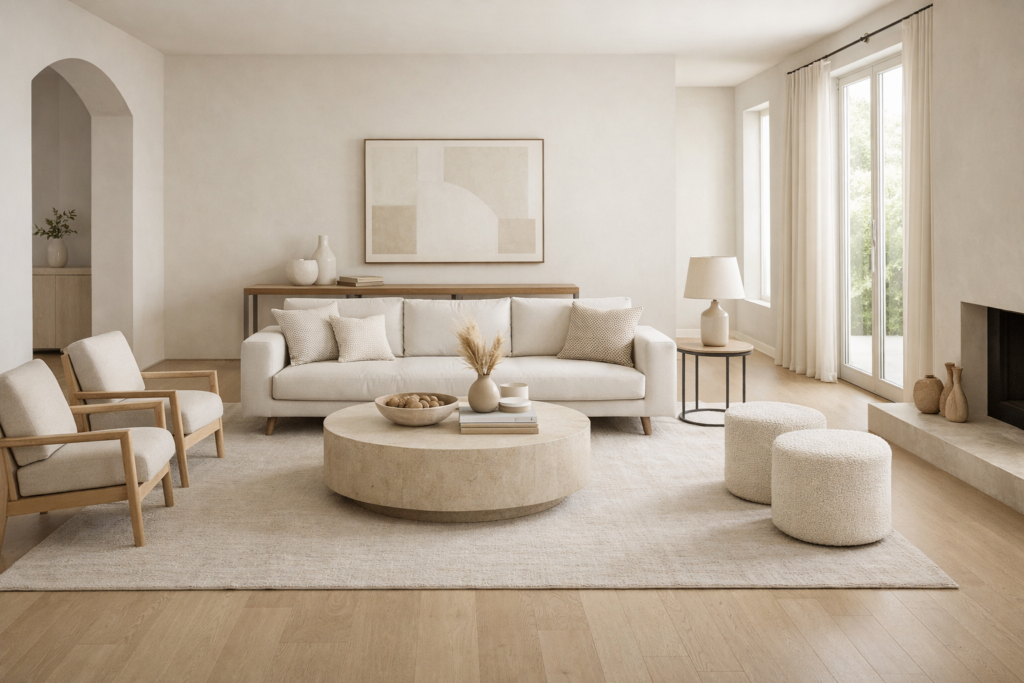
Negative space is the intentional emptiness between objects. In well-designed interiors, empty space is treated as part of the design. By pulling furniture 6 to 12 inches away from walls, you create breathing room that instantly makes a room feel more open and refined. These simple changes can make a bigger difference than buying something new.
The Floating Furniture Technique
Professional home stagers often use the floating furniture method by placing sofas and chairs slightly away from walls to create more intentional conversation areas. For example:
- Float a sofa 12 to 18 inches off the wall
- Anchor the space with a rug you already own
- Position chairs opposite the sofa to create balance
This arrangement makes the room feel thoughtful and sophisticated.
Try Digital Furniture Shuffling First
Before moving heavy furniture, sketch your room or use a phone app to test different layouts. This modern method saves effort while helping you try bold new arrangements. It is one of the smartest ways to refresh a room without shopping.
Keep these layout tips in mind:
- Create walking paths at least 30 to 36 inches wide
- Avoid blocking natural light
- Use symmetry to guide the eye
These strategies are especially helpful if you are exploring rearranging furniture ideas or learning how to decorate your room without buying anything.
Edit the Room Instead of Adding More
Luxury is not about abundance. It is about precision. One of the most effective home decor ideas is learning how to edit a room with intention instead of filling it with more things.
Decluttering with Visual Weight in Mind
Every object in a room carries visual weight based on its size, color, shape, and texture. A dark leather recliner, for example, feels visually heavier than a light linen chair.
When too many heavy elements compete for attention, the room feels cluttered even if it is clean. That is why decluttering remains one of the most valuable ways to improve a home.
Use the One-Item Rule
Remove one bulky or visually dominant item from a room and notice what changes. Often, the results are immediate:
- The room feels larger
- Light moves more freely
- The remaining pieces stand out more beautifully
This is a simple but powerful styling principle often used in luxury staging.
Create Quiet Corners
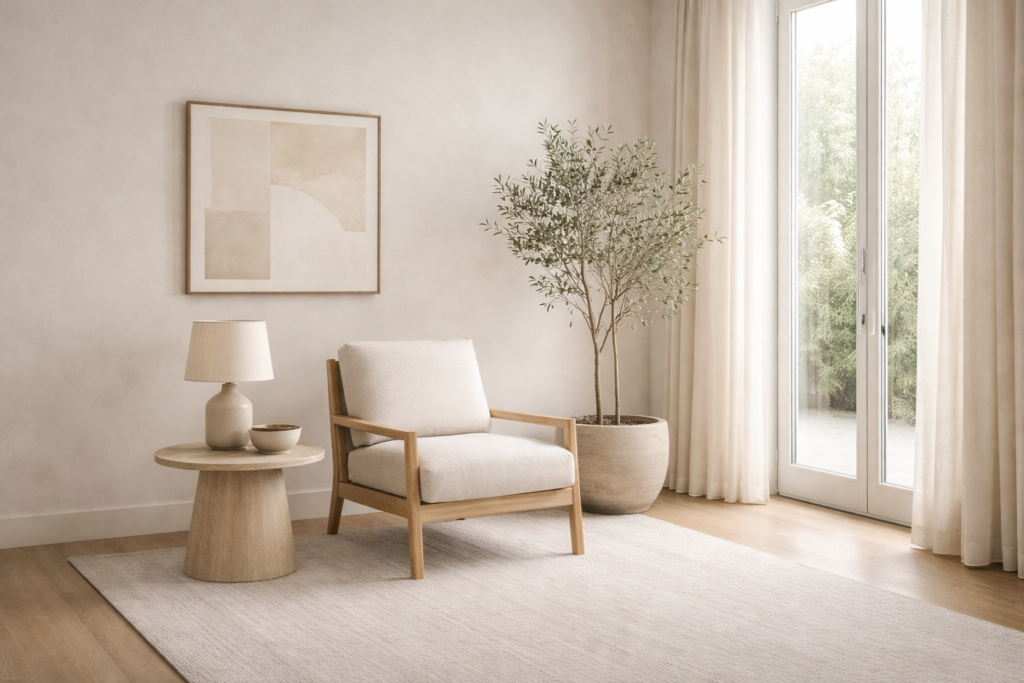
Every room benefits from at least one area of visual rest. This could be a clear side table, an uncluttered shelf, or a console with only one or two intentional items. Quiet corners allow the mind to relax and make the whole room feel calmer.
When editing a room, ask yourself:
- What feels unnecessary?
- What interrupts the visual harmony?
- What can be moved or removed?
These questions often lead to better results than shopping for more decor.
Decorating with Things You Already Have
Lighting is one of the most overlooked design tools in the home, yet improving it often costs nothing. When people look for decorating ideas using things they already have, lighting should be one of the first places they start.
Budget Decorating Ideas with Better Lighting
Professional designers usually work with three layers of light:
- Ambient lighting for overall illumination
- Task lighting for reading or focused activities
- Accent lighting for atmosphere and style
Most homes depend too much on overhead lighting, which can make a room feel flat. Better lighting arrangements can improve both mood and comfort.
Reposition Lamps for a New Look
Take inventory of the lamps you already own and move them with purpose:
- Shift a bedside lamp to a living room console
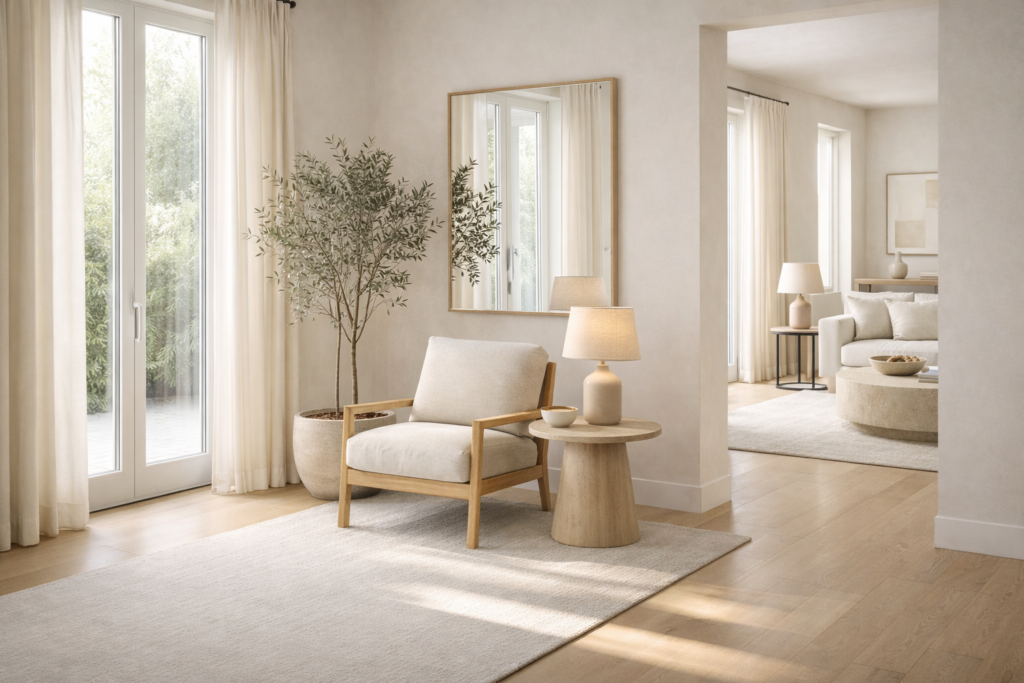
- Place a floor lamp beside a chair to create a reading corner
- Use matching lamps on each side of a sofa or bed for balance
These small adjustments make a room feel more layered, polished, and intentional.
Maximize Natural Light
One of the best free upgrades in any home is natural light. Try these easy changes:
- Clean windows inside and out
- Polish mirrors so they reflect light deeper into the room
- Open heavy curtains during the day
These changes create a brighter atmosphere and strengthen your connection to natural rhythms, which is a core principle of Biophilic Design.
Bright, layered lighting can improve mood and energy, while dark and uneven lighting often does the opposite. If you want practical ways to refresh your home on a budget, start here.
Upcycling and Reuse for a Fresh Feel
True luxury today is sustainable. Some of the best home decor ideas come from making better use of what you already own.
Upcycling Home Decor with Textiles
Textiles are one of the fastest ways to change the feeling of a room. You can:
- Drape a scarf over the back of a chair
- Fold an heirloom quilt at the foot of a bed
- Layer rugs for extra warmth and depth
This kind of styling supports the look of Tactile Minimalism, where texture adds richness without clutter.
Rethink the Function of Everyday Objects
Items do not need to stay in their original roles. That is where creative styling becomes powerful. For example:
- A kitchen stool can become a bedside table
- A stack of books can act as a pedestal
- A tray can become a coffee table centerpiece
These are practical and elegant ways to refresh a room without buying anything new.
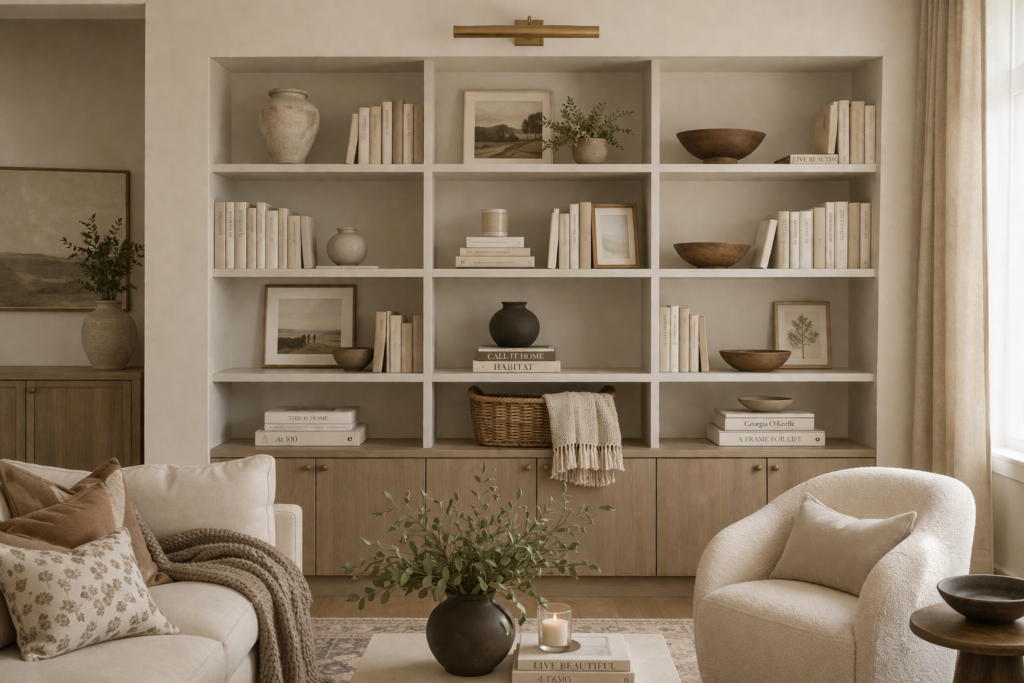
Restyle Your Bookshelves
Bookshelves offer a great chance to restyle without shopping. Try this:
- Group books by color or tone
- Mix horizontal and vertical stacks
- Leave a little empty space between sections
- Add a small object from another room for contrast
This creates rhythm and visual interest, even in small spaces.
Using what you already own also supports eco-friendly home decor. It reduces waste, cuts unnecessary spending, and makes your home feel more personal.
Make Your House Look Expensive for Free
Luxury is not about price. It is about feeling. The best home decor ideas help your home feel calm, balanced, and intentional.
Use Symmetry for a Polished Look
The brain naturally responds well to symmetry. It creates a sense of order and ease. Use pairs when possible:
- Two lamps on either side of a sofa
- Matching cushions
- Balanced shelf decor
- Similar objects placed at equal height
Symmetry instantly makes a space feel more polished.
Improve Scent and Atmosphere
Beautiful homes engage more than just the eyes. Scent also shapes the experience of a room. You do not need to buy anything new to improve it:
- Simmer citrus peels and herbs on the stove
- Use essential oils you already have
- Keep fabrics, rugs, and surfaces clean
A fresh-smelling home always feels more elevated and welcoming.
Bring in Natural Elements
Bringing nature indoors remains one of the most effective design choices. Try these simple updates:
- Move existing plants where they can be seen more clearly
- Place plants near windows or light sources
- Highlight natural materials like wood, linen, or stone
These touches reduce stress and make a space feel more alive and grounded.
Final Thoughts
If you have been searching for home decor ideas without buying new furniture, the answer is not in adding more. It is in seeing your home with fresh eyes. Rearranging, editing, restyling, and reusing can completely change the atmosphere of a space.
True elegance is not purchased. It is revealed through intention, balance, and creativity. With the right approach, your home can feel more expensive, more peaceful, and more personal without spending money on new furniture.