
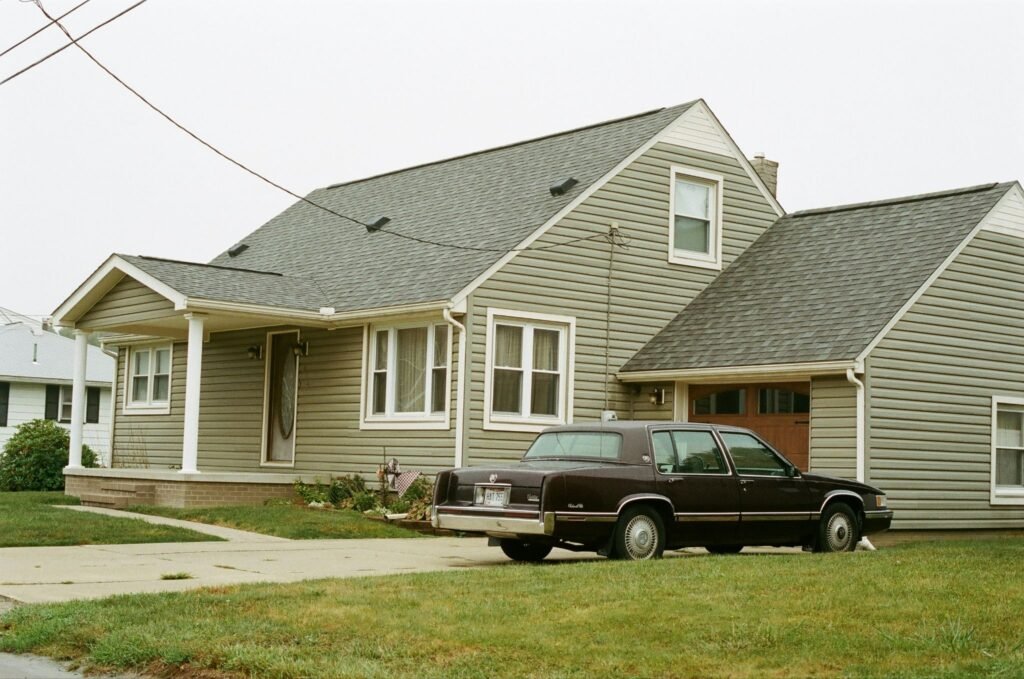
Enhancing curb appeal with a new roof is one of the smartest investments a homeowner can make, but only if the color is chosen correctly. Your roof covers nearly 40% of your home’s visible exterior, making it the single largest design decision on your home’s facade. Yet most homeowners spend weeks agonizing over paint colors and barely a moment on their roof.
Here’s the problem: the wrong roof color can make an otherwise beautiful home look dated, mismatched, or outright forgettable. In today’s competitive housing market, “forgettable” costs real money.
This guide covers everything you need to nail the decision: how to match colors to your home’s style, which shades appraisers and agents recommend, and what common mistakes to avoid. Pick wrong, and you’re staring at a 25-year mistake. Whether you’re replacing a worn roof or planning ahead, start here.
1. How Roof Color Affects Curb Appeal and Home Value
The First Impression You Can’t Take Back
Curb appeal is real estate psychology. Research on first impressions suggests buyers evaluate homes almost instantly often within seconds of pulling up. Your roof is front and center in that judgment.
A mismatched or faded roof signals neglect, even if the interior is immaculate. On the flip side, a well-chosen roof color ties the entire exterior together, making the home look intentional, well-maintained, and move-in ready. In short, the right roof color doesn’t just improve aesthetics it changes how buyers emotionally respond to your home before they ever step inside.
The ROI of Enhancing Curb Appeal With a New Roof
Enhancing curb appeal with a new roof goes beyond aesthetics; it’s a measurable financial decision. According to Remodeling Magazine’s Cost vs. Value Report, a new roof recoups 60–70% of its cost at resale. That number climbs when the color is chosen to complement both the home and its surroundings. Additionally, strong curb appeal can add an estimated $10,000–$15,000 to perceived home value, according to the National Association of Realtors.
✦ The Job Interview Analogy
The right roof color is the equivalent of a great outfit for a job interview. It doesn’t guarantee the sale, but the wrong one can absolutely cost you the offer — and potentially thousands of dollars at closing.
2. How to Boost Your Home’s Curb Appeal: Start With the Color Palette
Start With What You Already Have
Before you pick a roof color, take inventory of everything that isn’t changing: siding color, brick or stone accents, trim color, shutters, and driveway material. These fixed elements create the framework your roof color must work within.
Stand at the street and photograph your home’s front elevation. This gives you an objective view most homeowners are surprised by what they notice in a photo versus standing right in front of the house. For example, you may realize your siding reads more yellow-beige than white, which changes your roof color options significantly.
The 60-30-10 Rule for Exteriors
Interior designers use the 60-30-10 color rule, and it translates perfectly to home exteriors:
- 60% — Dominant color (typically your siding)
- 30% — Secondary color (trim, shutters, doors)
- 10% — Accent color (hardware, lighting fixtures)
Your roof doesn’t fit neatly into these percentages because of its large surface area, but it functions as a neutral anchor that ties the 60 and 30 together. Therefore, choose a roof color that bridges not competes with — your existing palette.
Warm vs. Cool Undertones
This is where many homeowners go wrong. Every color has an undertone: warm (yellow, red, orange base) or cool (blue, green, gray base). Mixing warm and cool undertones creates visual tension that looks “off” even if you can’t immediately identify why.
- Beige or tan siding → warm-toned roof (brown, weathered wood, terra cotta)
- Gray or white siding → cool-toned roof (charcoal, slate, blue-gray)
- Red brick → medium-warm tones (brown, black, dark gray)
3. Best Roof Colors by Home Style
Colonial and Traditional Homes
These homes are built on symmetry and classic proportions. As a result, they look best with timeless, conservative roof colors: charcoal gray, black, and deep brown. Avoid trendy colors here they clash with the architectural intent. For a Colonial with white siding, charcoal gray shingles from brands like GAF’s Pewter Gray or Owens Corning’s Estate Gray are perennially strong choices.
Craftsman and Bungalow Homes
Craftsman homes celebrate natural materials and earthy tones. As a result, colors like weathered wood, forest green, deep brown, or slate blue are ideal choices. These shades echo the natural textures of stone, cedar, and exposed wood beams that define the style. Ultimately, the goal is to feel like the roof grew organically out of the materials below it.
Ranch-Style Homes
Ranch homes have a long, horizontal profile. Consequently, a medium-to-dark roof helps give the home visual weight and prevents it from looking flat. Colors like charcoal, brownstone, and heather blend work particularly well. The added depth counterbalances the low roofline.
Modern and Contemporary Homes
Clean lines call for bold, decisive choices. Flat black, cool charcoal, or a deep slate give modern homes a sharp, polished look. Some contemporary designs use metal roofing in charcoal or weathered zinc for a striking, minimalist finish that holds up over decades.
Victorian and Historic Homes
These homes are already complex layered details, multiple colors, ornate trim. For that reason, your roof should bring harmony, not chaos. Dark neutrals like black, dark gray, or deep forest green let the architectural details shine without competition. In other words, the roof should recede so the craftsmanship can lead.
4. Climate, Region, and Your New Roof’s Curb Appeal
Heat and Sun Exposure
In hot climates like Texas, Arizona, and Florida, lighter roof colors reflect more solar radiation, keeping attic temperatures lower and reducing cooling costs. The EPA’s ENERGY STAR program has documented cooling cost reductions of 7–15% with reflective roofing. In contrast, in the Pacific Northwest or New England, where heating costs dominate darker roofs absorb heat and can actually work in your favor during cold months. It’s worth factoring your annual energy split between heating and cooling into your color decision.
HOA and Neighborhood Context
Before you fall in love with a color, check your HOA guidelines. Many associations maintain approved color lists for roofing materials. Even without an HOA, scan your street. A roof that clashes dramatically with surrounding homes can hurt, not help, your property value.
Regional Aesthetics
Regional home styles carry color traditions worth respecting:
- Southwest: Terra cotta, adobe brown, warm clay tones
- Northeast: Slate gray, charcoal, classic black
- Southeast: Lighter grays, weathered wood, sandy tones
- Midwest: Traditional browns, grays, neutral blends
5. Roof Colors That Boost Property Value
The Top Performers for Enhancing Curb Appeal With a New Roof
When it comes to enhancing curb appeal with a new roof, charcoal gray is the top recommendation from appraisers and agents alike. It pairs with nearly every siding color, appeals to the widest buyer pool, and reads as modern and well-maintained. Furthermore, it’s the one color that works across virtually every architectural style, region, and climate.
Black, meanwhile, is bold but powerful especially on white, gray, or light blue siding. It photographs beautifully, which matters enormously in the age of online listings where buyers scroll through dozens of homes in minutes.
Brown and weathered wood blends, on the other hand, are safe and warm choices for traditional and colonial homes. They feel approachable and timeless not boring, just dependably attractive.
Why Neutral Colors Consistently Outperform
Neutral tones dominate resale performance for a simple reason: they don’t exclude buyers. A home with charcoal or brown shingles appeals to the widest possible pool of prospective buyers, regardless of personal taste. Moreover, neutral colors age gracefully they look as good in year 15 as they did in year one, without requiring replacement simply because they’ve gone out of fashion.
Colors to Approach With Caution
Bright red, green, or blue roofs can be polarizing. While they may reflect personal taste, they narrow your buyer pool significantly. If, for example, you’re planning to sell within 5–7 years, neutrals are almost always the smarter financial play.
Similarly, faded or mismatched tones caused by poor material quality or sun damage actively reduce curb appeal. If you’re replacing an old roof, don’t replicate the original color if it didn’t age well. Instead, treat this as your opportunity to upgrade both the material and the color choice.
The Neighborhood Premium
Your home’s value is partially tied to the street it sits on. A roof color that elevates your home’s appearance without being jarring relative to neighbors creates what appraisers call a “neighborhood premium” — your home looks like the best version of the block, not an outlier.
6. Common Roof Color Mistakes to Avoid
Homeowners focused on enhancing curb appeal with a new roof often make these avoidable errors. Knowing them in advance can save you from a costly, decades-long regret.
Choosing Color From a Sample Chip Alone
Small swatches look completely different at full scale in natural sunlight. Always request large samples or use digital visualization tools before committing. Most major manufacturers GAF, CertainTeed, Owens Corning — offer free online tools that let you preview colors on your actual home.
Ignoring the Roof’s Texture
Dimensional shingles create shadow lines that make colors appear darker. For instance, a “medium gray” in a dimensional shingle can look nearly charcoal on your actual roof. Therefore, factor texture into your decision, not just the color swatch, and always view samples in the actual shingle format you’re buying.
Forgetting About Landscaping
Your roof color also interacts with your yard. Deep green hedges and trees make warm-toned roofs pop. Conversely, a stark gray roof against a lush green lawn can create an appealing contrast — or an awkward one, depending on tone. Step back and visualize the full picture, including your curb appeal landscaping, before finalizing. Related: see our guide on curb appeal landscaping ideas that work year-round.
Chasing Trends Over Timelessness
A trending color in 2025 may look dated by 2030. Since roofs last 20–30 years, neutral and classic colors are the only ones that age gracefully. Trendy ones rarely do, and unlike a paint color, you can’t change this decision cheaply or quickly.
Now that you know what to avoid, let’s put the financial picture in focus. The numbers behind roofing decisions are more compelling than most homeowners realize.
7. Key Statistics: Roof Color and Home Value
The data consistently supports what appraisers and agents have long argued: enhancing curb appeal with a new roof is one of the highest-return investments available to U.S. homeowners. Here’s what the numbers actually show.
| $12,000–$25,000 | Average cost of a full roof replacement in the U.S. (varies by material and region) |
| 60–70% | Average ROI on a new roof at resale (Remodeling Magazine, Cost vs. Value Report) |
| 7–15% | Potential reduction in cooling costs from light-colored or reflective roofing (EPA ENERGY STAR) |
| 40% | Approximate percentage of a home’s visible exterior made up by the roof |
| $10,000–$15,000 | Estimated increase in perceived home value from strong curb appeal (National Association of Realtors) |
| 94% | Of real estate agents recommend improving curb appeal before listing (NAR survey) |
Taken together, these figures paint a clear picture. For instance, a $20,000 roof replacement that adds $15,000 in perceived value and reduces annual energy bills by 10% pays for itself faster than most homeowners expect especially when you factor in the impact on days-on-market and offer price.
8. Pro Tips for Getting Your New Roof’s Curb Appeal Right
✦ PRO TIP: Test your color in multiple lighting conditions.
Natural light shifts dramatically from morning to late afternoon. A warm gray at noon can read almost purple by sunset. Pull large sample chips and observe them throughout the day before finalizing your choice.
✦ PRO TIP: Consider the trim as much as the shingle.
The contrast between your roof and your fascia or soffit trim determines whether the roofline looks sharp or muddled. Dark charcoal paired with crisp white trim creates clean definition — one of the most reliably attractive combinations in residential design.
✦ PRO TIP: Don’t forget the gutters.
Gutters run the entire length of your roofline. Builder-grade white gutters against a rich brown roof will undercut the whole look. Factor in gutter painting or replacement when budgeting the project.
✦ PRO TIP: Use digital visualization tools before committing.
GAF, CertainTeed, and Owens Corning all offer free online tools that let you upload a photo of your home and preview different shingle colors. Use them. It takes 10 minutes and eliminates a lot of expensive guesswork.
✦ PRO TIP: Consult a real estate agent, not just your contractor.
Your contractor knows materials. Your agent knows what moves homes in your zip code. If you plan to sell within 10 years, a short conversation about buyer preferences in your specific market could be worth thousands at closing. Ask them directly: what roof color do buyers respond best to in this neighborhood?
9. Roof Color Comparison Table
| Roof Color | Best For | Siding Match | Climate | Resale Appeal |
|---|---|---|---|---|
| Charcoal Gray | Most styles | White, gray, blue, green | All climates | ★★★★★ |
| Black | Modern, Colonial | White, light gray, navy | Cooler climates | ★★★★ |
| Weathered Brown | Craftsman, Ranch, Traditional | Tan, beige, brick, cream | All climates | ★★★★ |
| Slate Blue-Gray | Coastal, Craftsman | Gray, white, cedar | Moderate | ★★★★ |
| Terra Cotta / Clay | Mediterranean, Southwest | Stucco, adobe, cream | Hot, dry | ★★★ |
| Forest Green | Craftsman, Cottage | Cream, tan, natural wood | All climates | ★★★ |
| Light Gray / Dove | Ranch, Contemporary | White, cool gray, blue | Hot climates | ★★★★ |
| Bold Red / Blue | Statement homes | Very limited pairings | All climates | ★★ |
★★★★★ = Strongest resale appeal | ★★ = Limited buyer appeal
10. FAQ: People Also Ask
What roof color increases home value the most?
Charcoal gray is widely considered the top-performing roof color for resale value. It pairs with virtually every exterior color combination, appeals to the broadest range of buyers, and projects a clean, modern look that photographs well in online listings. Black is a close second for homes with contemporary or colonial architecture.
Does roof color affect energy bills?
Yes — significantly. Lighter roof colors (white, light gray, tan) reflect solar radiation and can reduce cooling costs by 7–15% in hot climates, according to EPA ENERGY STAR data. In contrast, darker roofs absorb more heat, which can be beneficial in colder regions but increases cooling loads in the South and Southwest.
Should my roof be lighter or darker than my siding?
Generally, your roof should be darker than your siding. This creates a visual anchor that grounds the home and mimics how we naturally perceive buildings lighter walls, darker roof. There are exceptions (modern designs sometimes use the same tone throughout), but darker-roof-over-lighter-siding is the most universally flattering formula.
How do I match my roof color to brick?
Brick is tricky because it contains multiple tones. First, pull the dominant undertone from your brick most red brick has warm orange or brown undertones, and match your roof to that. Deep brown, weathered wood, and dark charcoal all pair beautifully with red brick. By contrast, cool blue-grays will fight with warm brick’s undertones and should be avoided.
Can I change my roof color without replacing the whole roof?
Not easily. Roof shingle color is built into the material itself. Roof paint exists, but it is rarely recommended by roofing professionals. It can void warranties, trap moisture, and peel within a few years. As a result, if you’re unhappy with your current color, a full or partial replacement is the most reliable long-term solution.
What’s the best roof color for a house with white siding?
White siding is one of the most versatile exterior colors you can work with. It pairs well with almost any roof color. For maximum curb appeal, charcoal gray and black create a striking, high-contrast look. For a softer appearance, weathered brown or slate gray work beautifully. However, avoid light or white roofing with white siding; the lack of contrast makes the home look washed out.
How long does it take to see curb appeal results from a new roof?
Immediately. A new roof is one of the fastest curb appeal transformations available to homeowners. Unlike landscaping (which takes seasons to mature) or paint (which requires prep and drying time), a new roof delivers a complete visual overhaul within just a few days of installation.
Conclusion
Your roof is not just a functional structure. It’s a design statement that either elevates or undermines everything else about your home’s exterior.
Enhancing curb appeal with a new roof starts with a simple principle: choose a color that complements your home’s fixed elements, suits your climate, appeals to future buyers, and stands the test of time. You don’t need to be bold or trendy. You need to be intentional.
Charcoal gray, classic brown blends, and timeless black are popular for a reason — they work, they age well, and they photograph beautifully, making buyers stop scrolling. Moreover, they protect you from the 25-year mistake we warned you about at the top: a color that looked interesting in a sample chip but becomes a daily regret the moment it’s on your home.
If you’re planning a roof replacement, use this guide as your starting point. Pull out your home photos, note your siding and trim colors, check your region’s climate profile, and shortlist 2–3 colors using a manufacturer’s digital visualizer before you ever talk to a contractor.
Ready to take the next step?
Browse our Curb Appeal blog • How to Boost Your Home’s Curb Appeal Before
Selling. localhomeimprove.com