

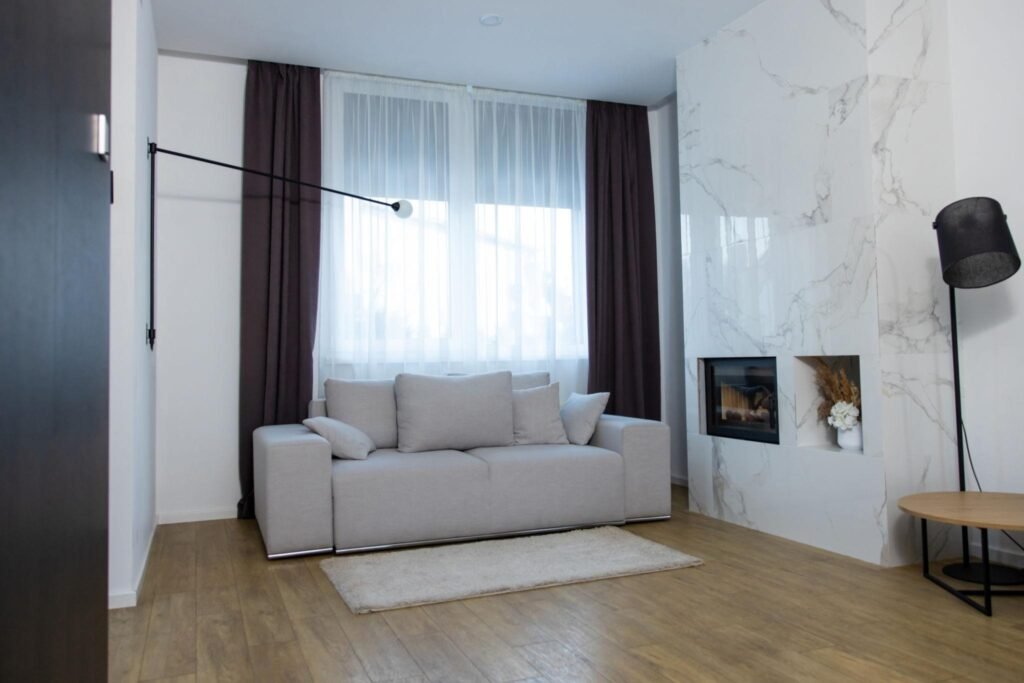
You’ve finally closed on your first home. You have the keys in hand, a mountain of empty boxes in the hallway, and a vision of a space that looks like it belongs on a high-end Pinterest board. But when reality hits, budgets shrink fast. The good news? This guide to affordable home design for beginners will show you how to create a stylish, high-end look without overspending.
It’s a common trap. Most new homeowners think a beautiful home is purely a byproduct of a massive bank account. They stare at those echoing, bare walls, get overwhelmed, and end up panic-buying a “temporary” furniture set that they’ll still be resenting ten years later. But here’s the truth: the problem isn’t your budget; it’s just that nobody gave you a roadmap.
If you are looking for affordable home design for beginners, you don’t need a six-figure salary. You just need a strategy. In this guide, we’re going to treat high-end style like a science, focusing on the specific visual “hacks” that professional designers use to make a room look expensive without actually spending much at all.
Why Affordable Home Design Doesn’t Have to Be Expensive
The secret to a high-end home isn’t the price tag on the sofa it’s the intentionality in the tiny details. Luxury usually boils down to three specific ingredients: texture, light, and cohesion. Think about the last time you walked into a boutique hotel. You weren’t just looking at furniture; you were experiencing “layered” lighting (zero harsh overhead glare), heavy fabrics that actually have some weight to them, and hardware that feels solid and cold to the touch. For a new homeowner, the best budget interior design tips are the ones that recreate those expensive feelings using affordable alternatives.
By focusing on “the big impact, small effort” changes like lighting, hardware, and textiles you can trick the eye into seeing luxury. We’re moving away from that “flat” showroom look and moving toward a home that feels curated and collected over time.
Affordable Home Design for Beginners: Step-by-Step Strategy
To master affordable home design for beginners, don’t try to do everything at once. We start with the “bones” of the room and layer up until it feels finished.
Step 1: Lighting Tips for Affordable Home Design for Beginners
Standard builder-grade homes are famous for “boob lights” those generic, flush-mount dome lights and sterile, bright recessed lighting. This is the fastest way to make a beautiful room look cheap and cold.
- Ditch the “Big Light”: Professionals almost never use the main ceiling light as the primary source of light. Save the overheads for when you’re looking for a lost contact lens or cleaning the floors.
- The Rule of Three: Aim for at least three sources of light in every room. Think: a floor lamp in a reading nook, a table lamp on a sideboard, and maybe some battery-operated picture lights over your favorite art.
- Check Your Kelvin: Switch out those “Cool White” bulbs for “Warm White” (look for 2700K to 3000K on the box). It instantly softens the room and hides the fact that your furniture might be from a thrift store.
- The Sconce Trick: Buy a pair of beautiful wall sconces, but don’t worry about the wiring. Just stick battery-powered “puck lights” inside them. You get the high-end look of wall lighting for the cost of a pizza.
Step 2: The Hardware Update (The “Jewelry” Phase)
Think of your cabinet handles, door knobs, and faucets as the jewelry of your room. Builders usually pick the cheapest, most generic chrome or brushed nickel they can find.
- Go Matte Black or Unlacquered Brass: These finishes feel modern and significantly more custom.
- Feel the Weight: When you’re shopping for new pulls, avoid the hollow, lightweight ones. Go for solid metal. That “heft” makes a massive psychological difference every single time you open a drawer.
- Fix the Switch Plates: Replacing those yellowing, plastic light switch covers with matte metal or high-quality plastic versions is a $5 fix that makes a room feel “finished” in minutes.
Step 3: Textile Tricks in Affordable Home Design for Beginners
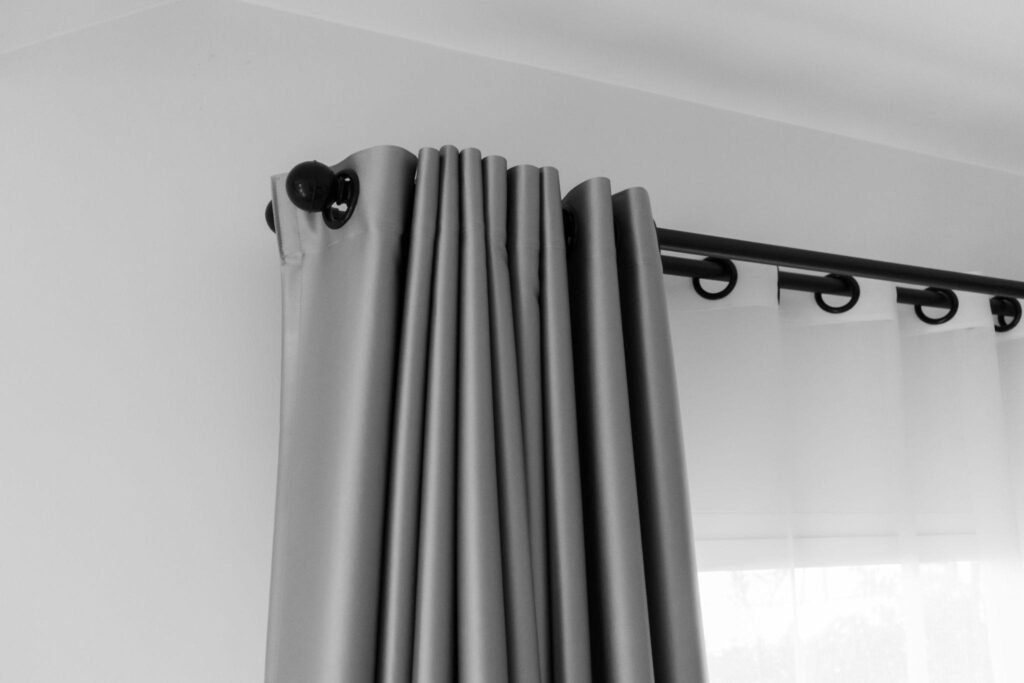
This is the ultimate secret of how to make a room look expensive without replacing a single piece of furniture. It’s all about the “drape” and the “plump.”
- The Curtain Rule: Always and I mean always hang your curtain rods “High and Wide.” The rod should be as close to the ceiling as you can get it, not just sitting on top of the window frame. This “lifts” the ceiling and makes your room feel airy.
- Double the Panels: A common mistake is buying just enough curtains to cover the window. You want it to look lush. Buy twice the width of the window so the fabric creates those deep, luxurious folds even when the curtains are closed.
- Ditch the Cheap Inserts: Never use the flat, polyester inserts that come inside store-bought pillows. Buy feather or “down-alternative” inserts that are two inches larger than the actual pillow cover. This gives you that “karate chop” designer look that stays plump.
Step 4: DIY Aesthetics with Paint and Molding
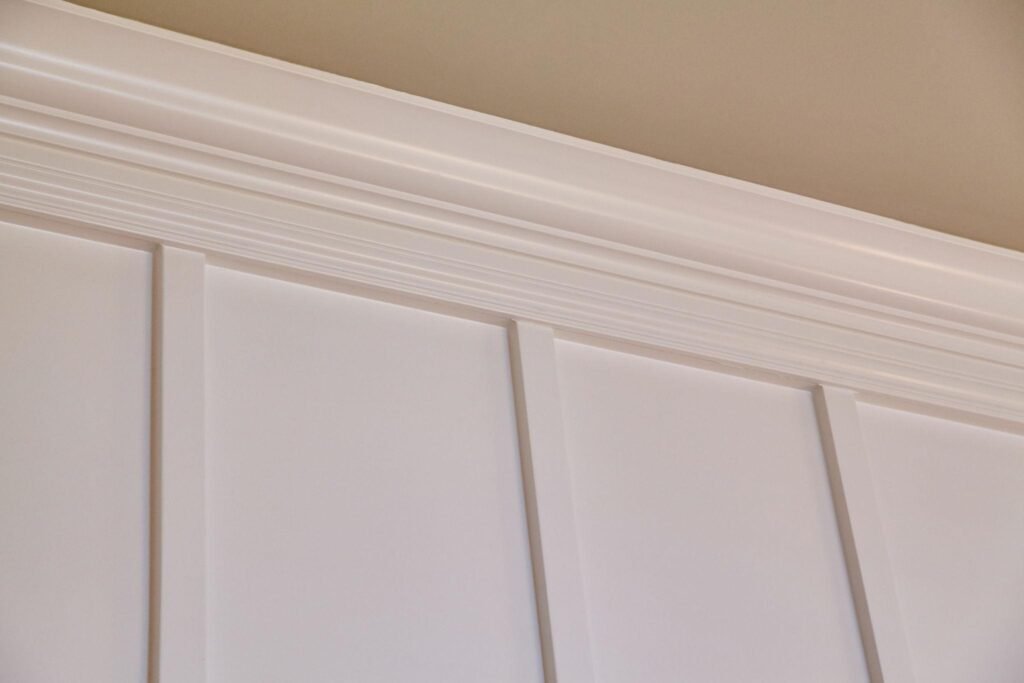
Paint is basically liquid gold when you’re on a budget.
- Try Color Drenching: This is a big designer move. Paint your baseboards and crown molding the exact same color as your walls. It creates a seamless, high-end look that makes the walls look taller.
- Add Box Molding: You can buy pre-cut wood strips at any hardware store. Simply gluing them in “boxes” on a plain wall creates a sophisticated, classic vibe for about $50 in materials.
Step 5: Curate, Don’t Just “Decorate”
The biggest giveaway of a beginner designer is buying “the set.” A matching sofa, love seat, and coffee table from a big-box store says “I bought everything on page 4 of the catalog.”
- Mix Your Woods: It’s okay if your coffee table is oak and your side table is walnut. Mixing finishes makes a room look like it grew over time.
- The 80/20 Rule: 80% of your room can be budget-friendly (IKEA, Target, or Facebook Marketplace), but spend the other 20% on “touchpoints” the things you actually use every day, like a high-quality rug or one really cool vintage chair.
Affordable Home Design for Beginners: Mistakes to Avoid
Even with the best budget interior design tips, a few bad habits can drag the whole room down. Avoid these:
- The “Floating” Rug: A rug that is too small makes the whole room feel cramped. Make sure at least the front legs of your furniture are sitting on the rug.
- Generic “Word Art”: We’ve all seen the “Live, Laugh, Love” signs. High-end design favors abstract art, black-and-white photography, or even a framed vintage map.
- Filling Every Gap: You don’t need to fill every shelf with “stuff.” Empty space (or “negative space”) is actually a hallmark of luxury. It lets the room breathe.
- High-Water Curtains: Curtains that stop a few inches above the floor look like pants that are too short. They should “kiss” the floor or even puddle an inch or two for a romantic look.
Real-Life Example: The $200 Living Room Glow-Up
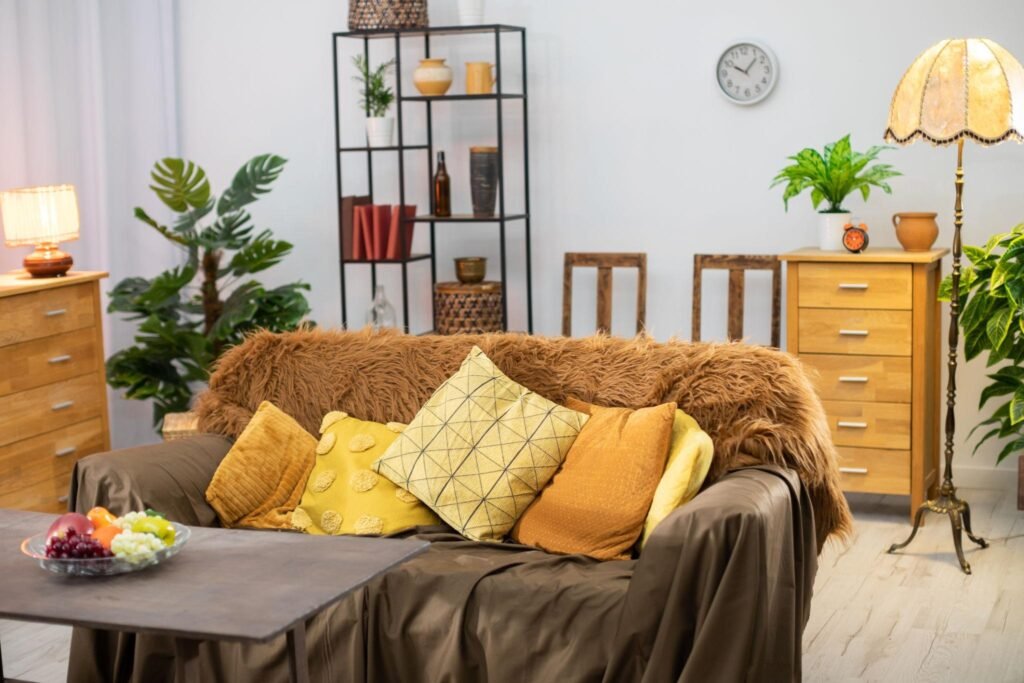
Let’s look at a standard, boring living room: white walls, a grey sofa, and no personality.
- Before: One harsh overhead light, naked windows, and a tiny rug in the middle of the floor.
- The Budget Fix:
- $40: Two sets of long, heavy velvet curtains (hung at the ceiling).
- $60: A large, secondhand jute rug to layer under the existing small one.
- $50: Two thrifted brass lamps with clean, new shades.
- $50: A gallon of paint for a “color-drenched” accent wall with DIY molding.
- Result: The room no longer looks like a rental; it looks like a home with a history.
FAQ: Affordable Home Design for Beginners
Q: Where should I spend my money first? A: Lighting and the rug. These two things set the entire mood of the room. You can hide a cheap sofa with a nice throw blanket, but you can’t hide bad lighting or a tiny rug.
Q: How do I pick a color palette without making a mess? A: Go for the “60-30-10” rule. 60% is your neutral base (walls), 30% is a secondary color (furniture), and 10% is your “fun” accent color (pillows and art).
Q: Can I really do “DIY home aesthetics” if I’m not “handy”? A: Definitely. Changing a lightbulb, swapping a drawer pull, or using “peel and stick” wallpaper requires zero power tools and zero experience, but it changes everything.
Q: How do I make a small room feel bigger? A: Use mirrors to bounce light around, and choose furniture with visible legs. If you can see the floor underneath a chair, the room feels much more open.
Summary Checklist for New Homeowners
- Turn off the overhead “boob lights” and add three lamps.
- Move those curtain rods up to the ceiling and out past the window frame.
- Swap out the generic kitchen and bathroom handles for something solid.
- Buy oversized feather inserts for your throw pillows (the “karate chop” test).
- Paint the trim to match the walls for a custom feel.
- Mix your textures throw a wool blanket over a leather chair.
Achieving affordable home design for beginners isn’t about finishing a house in a weekend. It’s a marathon. By focusing on these small but mighty “hacks,” you’ll end up with a home that doesn’t just look expensive, it feels like you.